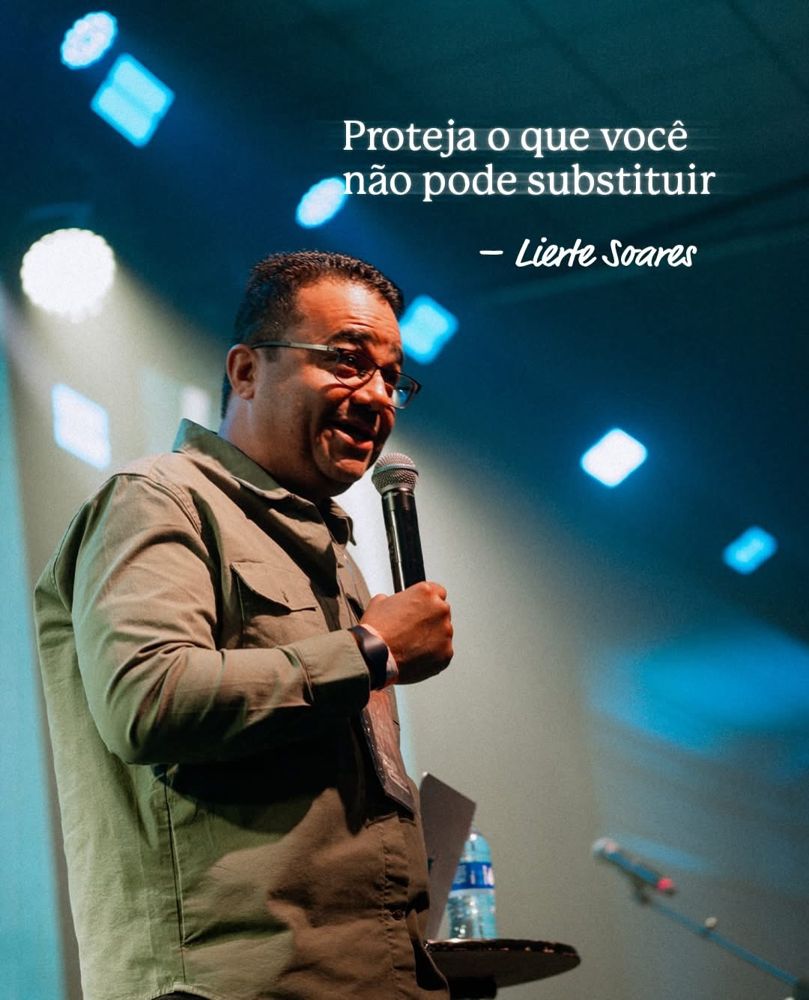
History is often made quietly. Sometimes it happens in a crowded room, through a unanimous vote, without cameras, headlines, or anyone fully understanding the significance of what has just taken place. For me, November 2023 was one of those moments. When the Baptist Churches of New England elected me as president, I received much more than a leadership responsibility. I received the weight of a story much bigger than myself. I became, according to the historical record and the information available to us at the time, the first Brazilian-born president of a regional Baptist convention within the Southern Baptist Convention in its 178-year history. I did not walk into that moment believing that I was breaking a barrier. I walked into it believing that God had opened a door. But sometimes when God opens a door for one person, He is also opening a door for an entire generation.
For me, the significance of that election has never been primarily about personal achievement. It is about what the moment represents for the changing face of Christianity in America. I am Brazilian. I was born in Brazil, raised in a Brazilian family, shaped by Brazilian Christianity, and eventually sent to the United States as a missionary. Yet, over the years, I discovered something profound: God did not send me to America so that I would stop being Brazilian. He sent me to America precisely as a Brazilian. My cultural background, language, immigrant experience, theological education, pastoral experience, and cross-cultural journey became part of the ministry God entrusted to me. I have learned that the Kingdom of God does not require us to erase where we came from in order to serve where we are going. In fact, one of the great opportunities before the American church today is learning how to receive the gifts, experiences, perspectives, and missionary vision that God is bringing from the nations.
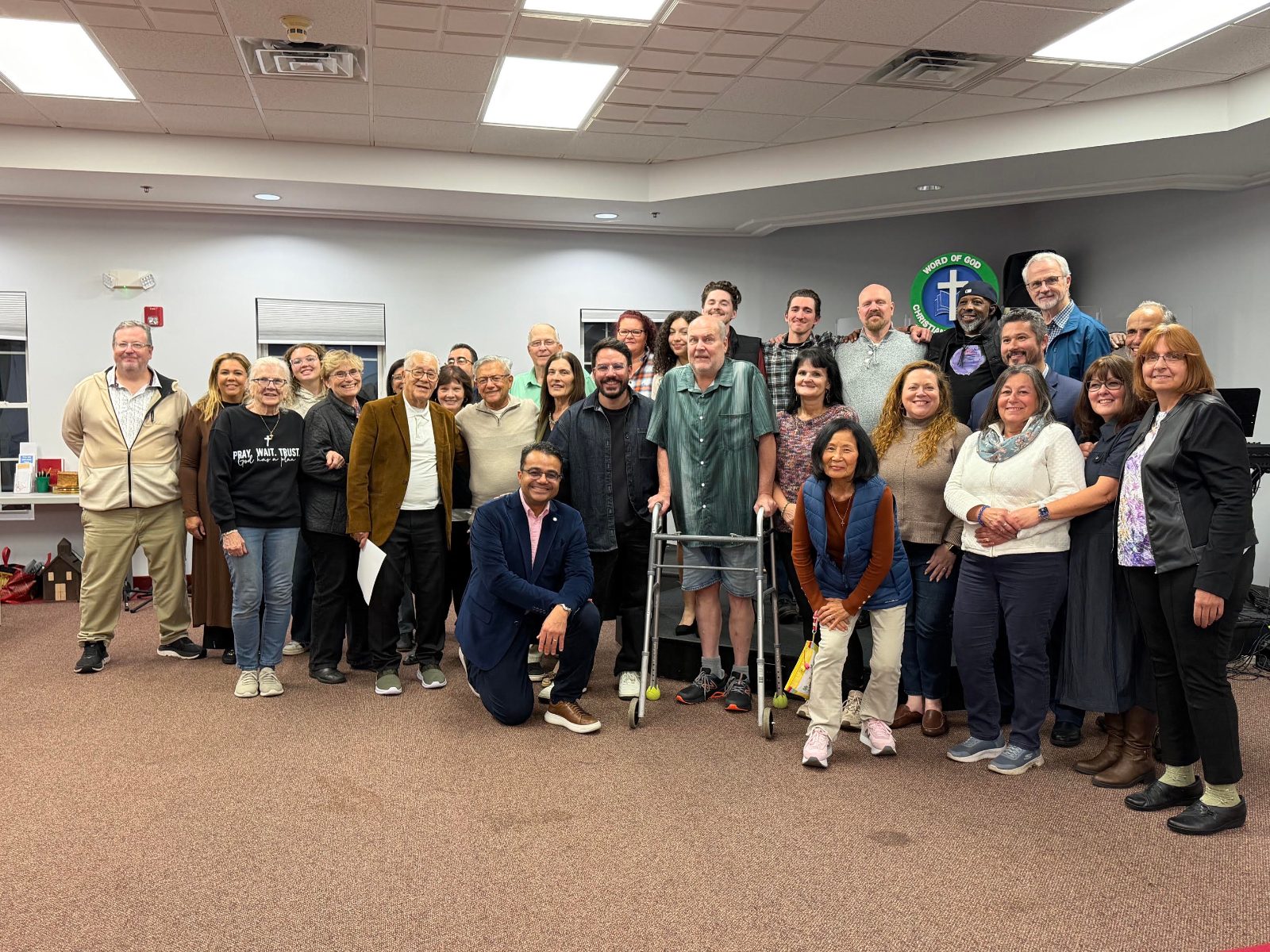
The Baptist Churches of New England occupy a unique place in this transformation. New England is often remembered as the historic heartland of American Christianity, the region associated with theological institutions, historic churches, revivals, missionaries, and some of the earliest chapters of Protestant Christianity in America. But the New England of the twenty-first century is not the New England of previous generations. The demographic, cultural, linguistic, and religious landscape has changed dramatically. Churches that once existed in relatively homogeneous communities now minister in neighborhoods populated by people from dozens of nations. Congregations worship in Portuguese, Spanish, Haitian Creole, Mandarin, Korean, French, Nepali, and other languages. Immigrant congregations are not simply peripheral communities on the edge of American Christianity. They are increasingly part of the center of the Christian story in places like New England.
This reality requires more than demographic awareness. It requires a theological and missiological response. The question is no longer simply, “How can established American churches reach immigrants?” We must also ask, “What can immigrants teach the American church?” That second question changes everything. It moves us from a one-directional model of mission to a reciprocal model of mission. It recognizes that missionaries can come from everywhere and go everywhere. It recognizes that the Global South is not merely a mission field but also a missionary force. It recognizes that immigrants are not simply people who need to be reached but brothers and sisters who have already encountered Christ and may have enormous gifts to contribute to the renewal of churches in North America.
This conviction has shaped my understanding of what I call Reverse Mission. The Gospel has not changed, but the world in which we carry the Gospel has changed. For centuries, much of the missionary movement was imagined as flowing from the West to the rest of the world. Today, we are witnessing a more circular movement. Africans are planting churches in Europe. Brazilians are planting churches in North America and Europe. Asians are reaching Western cities. Latinos are revitalizing communities across the United States. Missionaries from nations that historically received missionaries are now being sent to nations that historically sent missionaries. The circle of the Gospel is becoming more complete. This is not about replacing one missionary center with another. It is about recognizing that the Kingdom of God has never been confined to one nation, one culture, one continent, or one direction.
My election as BCNE president therefore became meaningful to me because it represented something larger than representation. Representation matters, but representation by itself is not enough. The goal is not simply to have a Brazilian sitting at the table. The goal is to build a table where Brazilians, Americans, Africans, Asians, Latinos, Europeans, immigrants, missionaries, pastors, church planters, and established church leaders can sit together and participate in the mission of God. Leadership must create space for reciprocity. We cannot build the future church by asking immigrant believers to remain permanent recipients of ministry. We must recognize them as co-laborers, leaders, missionaries, theologians, church planters, educators, and senders.
That conviction has profoundly influenced my approach to church planting and multiplication through the BCNE Multiplication Center. I believe that the future of church multiplication in New England will require us to move beyond isolated ministry models. The old question was often, “How do we start another church?” The better question is, “How do we cultivate a multiplying movement of healthy churches and leaders that can reproduce across cultures and generations?” Church planting is not merely about launching a Sunday service. It is about developing disciples, raising leaders, forming healthy communities, multiplying missionaries, and creating churches capable of reproducing themselves.
One of the principles I emphasize is the importance of mixed-ministry teams. I do not believe immigrant churches should be treated as separate islands forever. Nor do I believe historic American churches should simply disappear into a new cultural model. There is an opportunity for something much more beautiful: reciprocal partnership. Indigenous American Christians and international believers can serve together. English speakers and multilingual believers can learn from one another. Established pastors can mentor immigrant leaders while immigrant leaders bring fresh missionary imagination to established congregations. Older churches can provide institutional wisdom, buildings, history, and resources, while younger immigrant communities can bring evangelistic energy, global networks, multilingual capacity, and a strong sense of missionary identity.
This is why I am deeply interested in what happens when cultures meet at the level of leadership. Cultural integration is not accomplished simply by putting people in the same room. It happens when people share responsibility, authority, relationships, ministry, prayer, vision, and sacrifice. We need leadership teams that are genuinely reciprocal. The immigrant should not always be the person receiving help. The established church should not always be the institution providing help. Both sides need one another.
Another important part of this vision is church revitalization through strategic partnerships and mergers. New England possesses an extraordinary treasure: historic churches with buildings, stories, traditions, archives, pastors, and generations of faithful believers. Some of these congregations, however, are experiencing serious decline. The answer is not always to abandon them and start something entirely new across town. Sometimes the future is hidden inside the old structure.
I have seen the possibilities that emerge when a younger, growing congregation and an older, struggling congregation begin to imagine a shared future. One example from my own ministry journey involved a Brazilian church plant in Newton and the older Framingham Baptist Church. Instead of treating these communities as unrelated ministries competing for the same people and resources, we pursued a path toward partnership and merger. The result demonstrated something important: revitalization does not necessarily mean returning a church to the way it was. Sometimes revitalization means allowing a historic church to become something new while honoring what God has already done through its history.
This is one of the great challenges facing churches across New England. We must learn to distinguish between preserving a building and preserving a mission. Buildings matter. History matters. Traditions matter. But the church exists for the Gospel and the mission of God. When a congregation can combine the faithfulness of its history with the missionary energy of a new generation, something extraordinary can happen.
That is why I often describe my ministry philosophy through the language of reset. Sometimes churches need a Mission Reset. Sometimes they need a Culture Reset. Sometimes they need an Identity Reset. A reset is not necessarily a rejection of the past. It is an opportunity to return to the essential things and ask how those essentials must be expressed in a changing world.
The same principle applies to leadership. We need a new generation of leaders who are comfortable crossing cultural boundaries. New England needs pastors who can preach the Gospel faithfully while understanding the cultures of the people they are serving. We need leaders who can listen before they speak, learn before they lead, and build relationships before they build organizations. My own framework has increasingly centered on five movements: Learn, Lead, Multiply, Send, Transform. We learn the culture. We lead people. We multiply leaders. We send missionaries. And we seek transformation in communities.
Perhaps nowhere is this more important than with Third Culture Kids, or TCKs. I believe TCKs may become one of the most strategically important leadership populations for the future of the global church. These are young people who grow up navigating multiple cultures. They may speak more than one language. They understand cultural transitions intuitively. They know what it means to belong to more than one world. They often understand the immigrant experience in ways that first-generation adults cannot fully articulate.
Rather than viewing this cultural complexity as a problem, I see it as a missionary gift. The TCK can become a bridge. A young person who has learned to move between cultures can potentially communicate the Gospel across cultural boundaries with unusual sensitivity. These young people need intentional discipleship, mentoring, theological education, leadership development, and opportunities to serve. If the church ignores them, we may miss one of the greatest leadership opportunities of the coming generation. If we invest in them, they can become pastors, missionaries, church planters, educators, worship leaders, entrepreneurs, theologians, and global Christian leaders.
My own story has convinced me that identity and mission are deeply connected. I have always said, in different ways, that I will always be Brazilian. Loving another country does not require me to stop loving my own. Serving America does not require me to abandon Brazil. In fact, my Brazilian identity became part of the reason I could serve America effectively. I learned that cross-cultural ministry is not about pretending to have no culture. It is about learning how to honor your culture while learning to honor another culture.
This is also why global reciprocity has become such an important part of my ministry. My vision for New England is not limited to New England. The challenges facing the American church are connected to what is happening in Brazil, Portugal, Europe, Africa, Asia, and Latin America. The solutions will not come from one country alone. We need global relationships in which churches teach one another, train one another, pray for one another, and send one another.
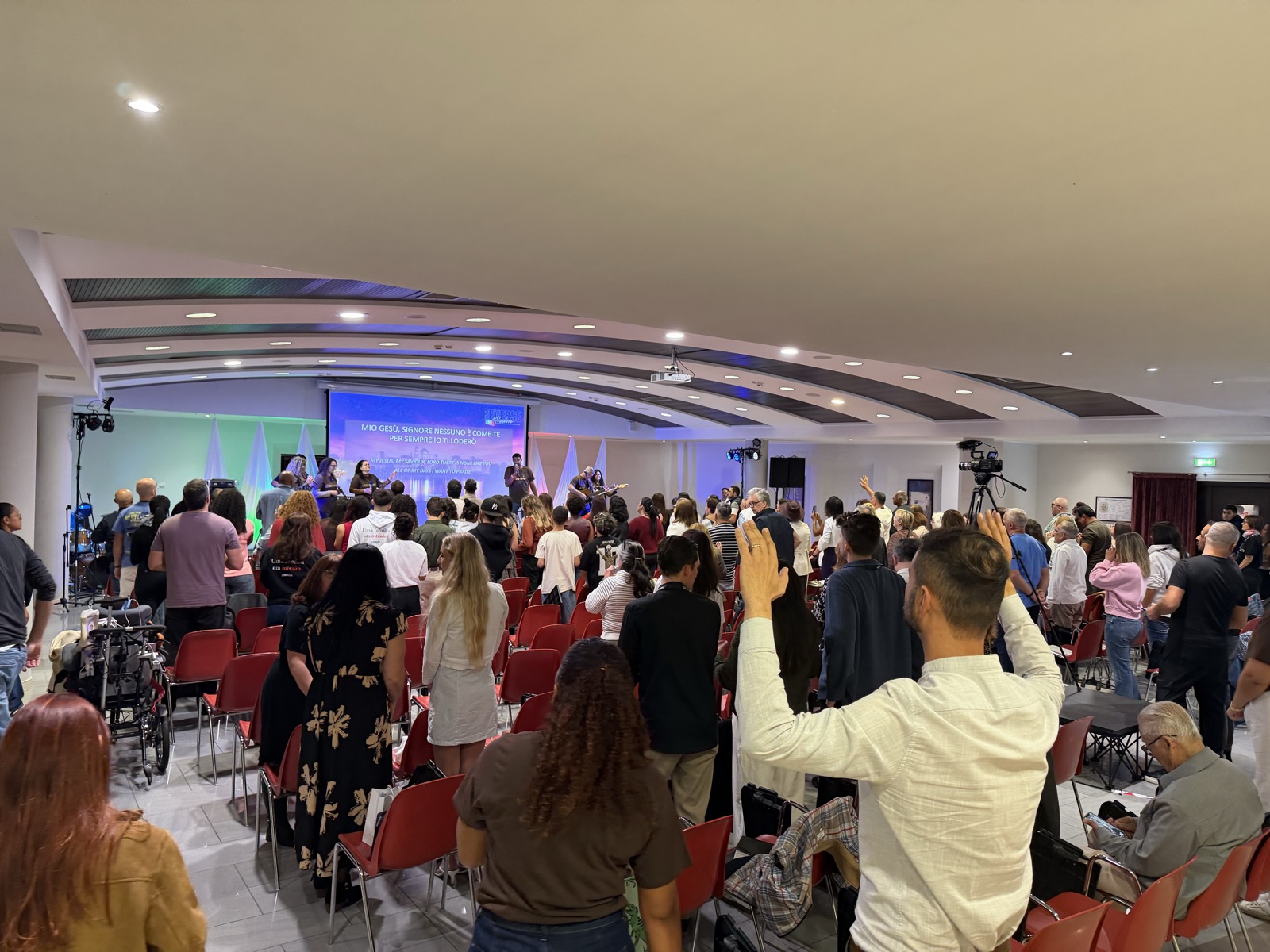
My work with pastors and leaders in Portugal, Brazil, Italy, and other contexts has reinforced this conviction. The future of mission will increasingly be collaborative. A Brazilian pastor can learn from an American pastor. An American church can learn from an African congregation. A European church can receive missionary leadership from Latin America. A church in New England can partner with a church in India. The direction of mission is becoming increasingly multidirectional.
This is what I mean when I speak about “from everywhere to everywhere.” The Kingdom of God is too large for a single missionary direction. The Great Commission belongs to the entire Church. Every believer has a place. Every culture has something to contribute. Every nation can send. Every nation can receive. Every church can become both a missionary church and a mission field.
Looking back at November 2023, therefore, I do not primarily remember the title. I remember the responsibility. Becoming president of the Baptist Churches of New England was not a trophy to place on a shelf. It was a stewardship. It reminded me that leadership is never ultimately about the leader. Leadership is about what becomes possible for others because you were willing to serve.
I also recognize that no one makes history alone. Whatever significance that moment carries belongs to many people who walked before me and many who walked beside me. Pastors mentored me. Churches received me. Brazilian believers prayed for me. American churches trusted me. Immigrant communities opened their doors. Educational institutions invested in me. Friends encouraged me. Family members sacrificed with me. Colleagues served with me. And above everything else, I believe God’s providence brought the pieces together.
My hope is not that I will be remembered as the first Brazilian. My hope is that I will have helped make it normal for Brazilians, Latinos, Africans, Asians, Europeans, and people from every nation to recognize that they belong in the leadership conversation of the American church when God calls and equips them. The goal is not to create a new hierarchy based on ethnicity. The goal is to create a Kingdom culture in which calling, character, faithfulness, theological conviction, servant leadership, and mission matter—and in which cultural diversity is recognized as a gift rather than an obstacle.
New England is changing. America is changing. The global church is changing. But the Gospel has not changed.
The Gospel has not changed. But the world in which we carry the Gospel has changed.
That reality demands leaders who can stand firmly on the unchanging truth of Scripture while remaining flexible enough to understand a changing mission field. It demands churches willing to learn. It demands pastors willing to cross boundaries. It demands established congregations willing to receive new people. It demands immigrant churches willing to step into leadership. It demands younger generations willing to carry the Gospel forward. And it demands all of us to remember that the mission of God is bigger than our cultural preferences.
When I look at the future of New England, I do not see a region that has lost its Christian story. I see a region whose Christian story is being rewritten through new relationships, new languages, new leaders, new churches, renewed churches, immigrant communities, TCKs, and global partnerships.
Perhaps this is the deeper meaning of making history.
History is not merely something we look back on.
History is something we participate in when we say yes to God’s mission.
I am grateful for the privilege to serve. I am grateful for the trust placed in me. I am grateful for the Brazilian believers who taught me to love the Gospel, the American churches that taught me to love this country, and the global church that continues to teach me that God’s Kingdom is larger than any one culture.
I came from Brazil to New England.
But I believe God brought me here for more than a geographic move.
He brought me here to help build bridges.
To help churches multiply.
To help historic churches find new life.
To help immigrant churches become missionary churches.
To help the next generation lead.
To help the American church see the nations already living in its neighborhoods.
And ultimately, to help complete the circle of the Gospel.
From everywhere to everywhere.
From the nations to New England.
From New England to the nations.
From the church to the world—and from the world back to the church.
The Gospel has not changed.
But the world in which we carry the Gospel has changed.
And I believe the Church must be ready for what God is doing next.