
When the Mission Field Changes: What Super Bowl LX Revealed About America and the Future of the Church
There are cultural moments that are much bigger than the event itself. They happen in a stadium, on a television screen, in a song, in a commercial, in a movie, or on social media, but their significance reaches far beyond entertainment. They reveal something about who we are becoming. They expose changes that have been developing quietly beneath the surface of society and suddenly bring them into the living room of millions of people at the same time. I believe Super Bowl LX, and particularly Bad Bunny’s halftime performance, was one of those moments. The performance was not merely another halftime show, and the reaction to it was not merely another debate about an entertainer. What happened represented something much larger about the changing cultural landscape of the United States. Nielsen estimated that the halftime performance reached 128.2 million viewers in the United States, while the entire Super Bowl averaged 125.6 million viewers. Those numbers are extraordinary, but the number itself is not the most interesting part of the story. What captured my attention was the cultural message communicated by the stage: Spanish-language music, Puerto Rican identity, Latin culture, immigrant experience, global influences and American entertainment were not being presented on the margins of American culture. They were occupying one of its most visible centers. For a pastor and missiologist, that should cause us to pause. Because when the cultural center of a nation changes, the mission field changes with it.
I call this The Bad Bunny Effect. I am not using that expression primarily to describe Bad Bunny himself. I am using it as a way of describing a broader cultural phenomenon: the movement of multicultural and multilingual expressions from the margins toward the center of American public life. For decades, many Americans could imagine multiculturalism as something that happened somewhere else—perhaps in large immigrant cities, ethnic neighborhoods, international festivals, language schools or specialized media. Spanish could be heard in Miami, Los Angeles, New York, Texas or Massachusetts without necessarily being perceived as part of the cultural center of America. Immigrant churches could worship in Portuguese, Spanish, Korean, Haitian Creole, Mandarin or another language and still be treated as separate expressions existing alongside “mainstream” American Christianity. But something is changing. The boundaries are becoming increasingly difficult to maintain. The United States is not simply receiving immigrants; immigrants and their children are helping shape the culture itself. Pew Research Center estimates that the Hispanic population of the United States reached 70.1 million in 2025, compared with 50.5 million in 2010 and 35.3 million in 2000. This is not simply a demographic statistic. Demography eventually becomes culture. Culture eventually becomes the environment in which people form identity, relationships, expectations, communities and even religious questions.
That is why I believe the American Church needs to look at Super Bowl LX through a different lens. The question is not whether someone personally liked Bad Bunny’s music. The question is not whether someone identifies with Puerto Rican culture. The question is not even whether one believes the performance represented the direction America should take. Those are personal and cultural judgments. The missionary question is different: What does this moment tell us about the people we are trying to reach with the Gospel? What does it tell us about the America in which our churches now exist? What does it tell us about the children growing up in our neighborhoods? What does it tell us about the young people sitting in our youth groups who are simultaneously shaped by American, Latino, African, Asian, Caribbean and global cultures? And perhaps the most uncomfortable question of all is this: What if the church is still preparing to minister to an America that no longer exists?
For many years, the American missionary imagination was built around the idea that America was primarily the sender and the rest of the world was primarily the receiver. We sent missionaries overseas. We sent money. We sent Bibles. We sent short-term teams. We planted churches in other countries. We organized mission conferences and prayed for the nations. And all of that remains important. But something profound has happened in the last several decades: the nations have come to us. The mission field has moved into our neighborhoods. The nations are in our schools, our universities, our workplaces, our soccer fields, our restaurants, our hospitals and our apartment complexes. They are raising children who speak multiple languages, navigating multiple cultural worlds and developing identities that cannot be explained through the categories of previous generations. And this is where the concept of Reverse Mission becomes more than a ministry slogan. It becomes a missionary framework for understanding the new reality.
Reverse Mission begins with a simple recognition: the Gospel has always moved in multiple directions. Christianity did not remain permanently attached to one civilization, one ethnicity, one language or one geographic center. The Gospel traveled from Jerusalem to Judea, Samaria and the ends of the earth, and throughout Christian history the center of gravity of Christianity has continually shifted. Today, Christianity is profoundly global. The missionary is no longer exclusively the Western missionary traveling to the Global South. The Brazilian missionary is going to North America. The Nigerian missionary is going to Europe. The Korean missionary is going to Latin America. The Indian pastor is planting churches in America. The immigrant congregation that was once established primarily to serve its own community may become a missionary force to the larger society. This is what I mean when I talk about “from everywhere to everywhere.” The Gospel is no longer adequately described through a one-directional missionary map. We are living in the age of the Full Circle of the Gospel.
And this changes the way we should think about the American Church. The question is no longer simply, “How do we reach immigrants?” It must become, “What is God doing among immigrant communities, and what can the broader American Church learn from them?” That is a radically different missionary posture. It moves us from paternalism toward partnership, from assumption toward listening, from cultural superiority toward mutual learning, and from seeing immigrants merely as recipients of ministry toward recognizing them as participants, leaders and missionaries. The Brazilian church in America is not simply a Portuguese-speaking version of an American church. A Nigerian church is not simply an African version of an American congregation. A Korean congregation is not merely a translated American ministry. These communities carry stories, experiences, theological instincts, family structures, missionary perspectives and cultural resources that can enrich the entire Body of Christ.
This is particularly important because the cultural transformation of America is happening faster than many churches are adapting their ministry imagination. Pew Research Center’s recent Religious Landscape Study found that 61% of U.S. Christians are non-Hispanic White, compared with 70% in 2007, while 18% are Hispanic, 13% are Black and 3% are Asian. Yet when researchers asked Americans who attend religious services about their congregations, two-thirds said most or all of the people in their congregation share their race or ethnicity. Half reported attending congregations where most or all worshipers are White. There is a fascinating tension here. The American Christian population is becoming more diverse, but many churches remain culturally homogeneous. The country is changing faster than the church’s congregational structures are changing.
That gap should concern us—not because cultural diversity is a trend that churches must follow to appear relevant, but because the Great Commission requires the Church to see people as God sees them. If the neighborhood changes and the church does not notice, the church eventually becomes disconnected from the mission field. If the community becomes multilingual and the church continues communicating as though everyone speaks and thinks the same way, the church creates unnecessary barriers to the Gospel. If the children of immigrants grow up navigating multiple cultures while the church gives them only one cultural framework for expressing their faith, we should not be surprised when they struggle to see how Christianity connects with the complexity of their lives.
The challenge, however, is not simply to create more programs in Spanish. Translation is important, but translation alone is not transformation. A church can translate every sermon into Spanish and still remain culturally monocultural. It can celebrate Hispanic Heritage Month once a year and still fail to develop genuine intercultural relationships. It can put international flags in the lobby and still have a leadership structure that does not reflect the community around it. It can sing one song in another language and still think of another culture as a guest rather than a partner. Reverse Mission requires something deeper than translation. It requires cultural humility.
Cultural humility begins when we stop assuming that our way of seeing the world is the only way to see the world. It means that before we teach, we listen. Before we build a program, we build relationships. Before we ask another culture to adapt to us, we ask what we need to learn from them. Before we describe people as a mission field, we recognize that many of them are already carrying the Gospel. And before we ask immigrants how they can become part of our churches, we ask whether our churches are prepared to become part of their stories.
This is especially important for the second generation and for Third Culture Kids. The children of immigrants are often growing up in a cultural environment that their parents never experienced. They may speak English more comfortably than the language of their parents. They may understand American social expectations while simultaneously carrying family traditions from another country. They may worship in English but pray with vocabulary learned from their parents’ homeland. They may feel completely American in one environment and unmistakably foreign in another. These young people are not simply caught between cultures. They can become bridges between cultures. In Reverse Mission, I believe TCKs and children of immigrants represent one of the most strategic missionary opportunities of the coming generation because they possess cultural fluency that many traditional missionary models have never taught.
The Bad Bunny Effect therefore points toward something larger than entertainment: the normalization of cultural hybridity. Increasing numbers of Americans do not live inside one cultural box. They move between languages, traditions, media ecosystems, cuisines, music, friendships and identities. A teenager can listen to worship music in English, reggaeton in Spanish, K-pop in Korean and Afrobeats in the same afternoon without experiencing those worlds as contradictory. A family can celebrate Thanksgiving and Brazilian Christmas traditions, attend an American soccer tournament and visit relatives overseas. A young adult can be deeply connected to American society while maintaining cultural relationships across an ocean. This is not an exception anymore. It is increasingly part of the American experience.
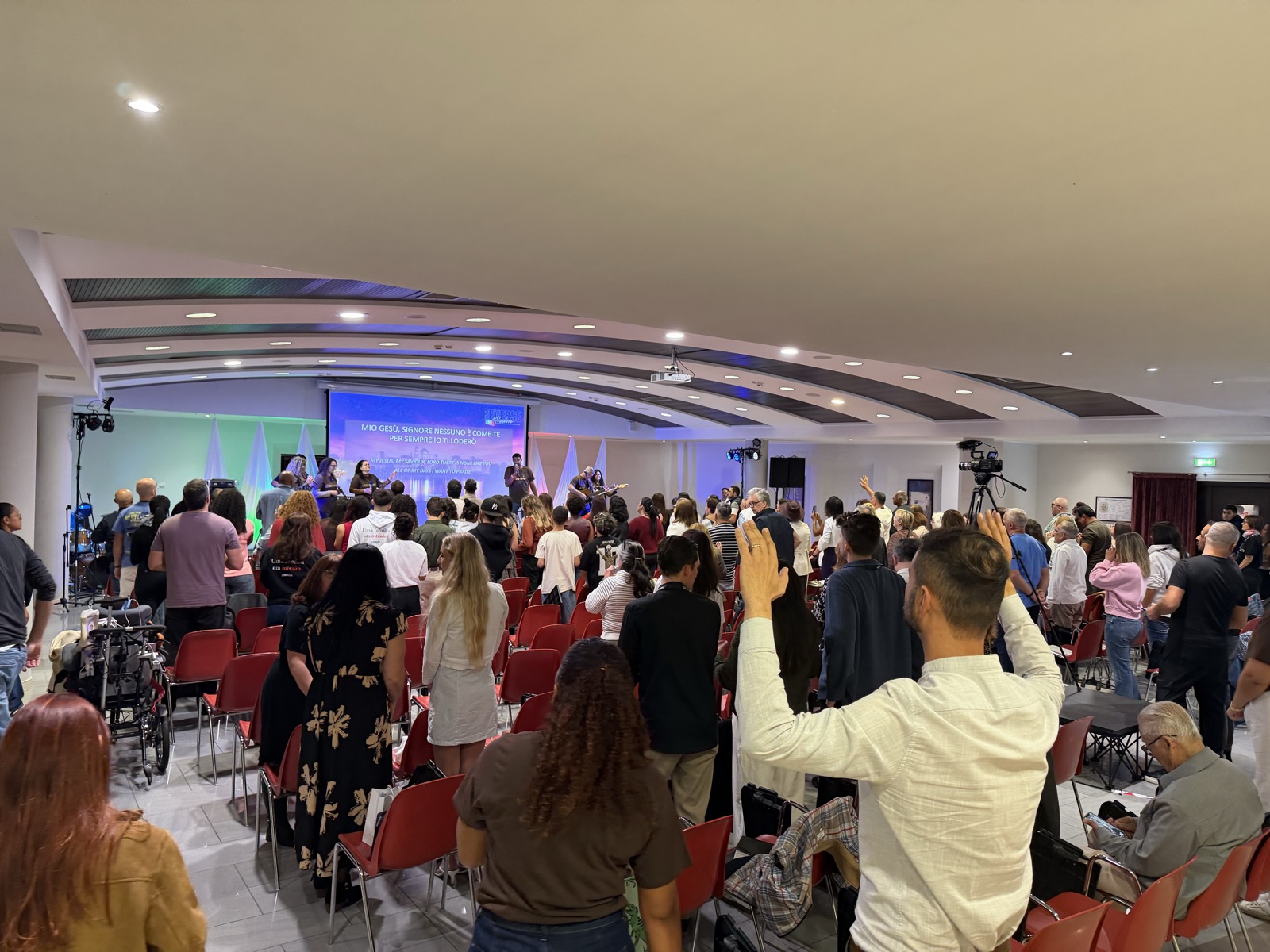
The Church needs to understand what this means for worship. The worship service of the future may sound different from the worship service of the past. Not necessarily because churches should intentionally manufacture multicultural experiences, but because the people in the room are already multicultural. English and Spanish may coexist naturally. Portuguese may appear in a prayer. African rhythms may influence worship. Asian-American musicians may introduce new musical expressions. Immigrant testimonies may become part of the congregation’s story. The goal should not be to create a multicultural performance. The goal should be to create a multicultural family. There is a profound difference between diversity as presentation and diversity as relationship.
The Book of Revelation gives us the theological picture we need. John sees “a great multitude that no one could number, from every nation, tribe, people and language.” The biblical vision of eternity is not a culturally uniform crowd. It is a redeemed humanity in which diversity remains visible while worship becomes unified around Christ. The Gospel does not erase culture; it redeems people within culture and brings them into a new family. That means the American Church should not fear cultural diversity as though it were inherently a threat to Christian identity. The question is not whether Christians should become less Christian in order to become more multicultural. The question is whether the Church can remain deeply Christian while becoming increasingly capable of loving people across cultural boundaries.
And this is where the Church must be careful about the temptation to turn every cultural conversation into a political conversation. Super Bowl LX generated strong reactions, including political criticism of the halftime performance and debate about immigration, identity and national culture. Those reactions are themselves evidence of how deeply entertainment, identity and public life have become intertwined. But the Church should resist becoming merely another arena in which Americans divide themselves into cultural tribes. If the Church simply reproduces the same cultural polarization found on television and social media, we will have missed one of our greatest opportunities.
The Church can become a place where people who disagree about politics can worship Jesus together. It can become a place where the immigrant and the native-born American sit at the same table. It can become a place where Spanish and English speakers pray together. It can become a place where generations listen to one another. It can become a place where cultural differences are neither ignored nor idolized. It can become a place where people discover that their ultimate identity is not found in ethnicity, political affiliation, nationality, language, economic status or cultural preference, but in Christ.
That kind of church will require a different kind of leadership. The pastor of the future American church cannot be only a preacher. He or she must increasingly become a cultural interpreter, bridge builder, listener, missionary strategist and reconciler. Pastors will need to understand the neighborhoods surrounding their churches with the same seriousness with which they study Scripture. They will need to know who is moving into the community, what languages are being spoken in local schools, what immigrant populations are growing, where international students are coming from, what businesses are emerging, what families are experiencing and what cultural questions are shaping the next generation.
This is not sociology replacing theology. It is missiology applying theology to reality.
Jesus did not send His disciples into an abstract world. He sent them into actual communities, among actual people, speaking actual languages, navigating actual cultures. Paul understood this deeply. He entered synagogues, marketplaces, homes and public spaces. He listened to cultural conversations. In Athens, he even engaged the intellectual and religious vocabulary of the people around him before proclaiming Christ. The missionary must know the people he or she is trying to reach.
This means that one of the most important disciplines for the American Church in the coming decades may be learning how to listen.
Listen to the immigrant.
Listen to the second generation.
Listen to the refugee.
Listen to the international student.
Listen to the Hispanic teenager.
Listen to the Brazilian mother.
Listen to the African entrepreneur.
Listen to the Asian-American pastor.
Listen to the secular young adult who grew up around Christianity but no longer understands why it matters.
Listen before speaking.
Because sometimes the greatest missionary mistake is not that we don’t have something to say.
It is that we have not taken enough time to understand the person to whom we are speaking.
The Bad Bunny Effect also reminds us that the Church can no longer assume that cultural influence moves only from the center outward. For a long time, American culture was exported to the world through Hollywood, television, music, sports, business and politics. But globalization has created a reverse flow. Culture now comes into America from everywhere. American cities are becoming global cities. American families are becoming intercultural families. American churches are becoming increasingly connected to global Christianity. The cultural missionary movement is therefore becoming multidirectional.
That is precisely why I believe Reverse Mission is not merely a strategy for immigrant churches.
Reverse Mission is a strategy for the American Church.
It is a way of seeing.
It asks us to look at the world around us and recognize that God may be sending missionaries into our communities whom we never expected to see as missionaries.
Perhaps the person sitting quietly in the back of the church who speaks broken English has spent twenty years praying for people in another country.
Perhaps the international student who attends an ESL class has already been discipled in a vibrant Christian community overseas.
Perhaps the Brazilian family that started a small immigrant church could become a bridge between the American church and thousands of Brazilians.
Perhaps the African congregation down the road has missionary experience that an established American congregation desperately needs.
Perhaps the young TCK sitting in the youth group possesses the cultural fluency that the church will need for the next thirty years.
The question is whether we will recognize these people as resources for God’s mission or simply as people who need to be assimilated into our existing systems.
The future will belong to churches that learn the difference.
There is also a warning here for immigrant churches themselves. Reverse Mission does not mean creating permanent cultural islands inside America. If immigrant churches understand themselves only as places where people from their homeland can preserve their culture, they may unintentionally miss their missionary calling. The immigrant church can become a powerful bridge to the broader community. It can preserve language while learning the culture. It can honor heritage while embracing mission. It can remain authentically Brazilian, Nigerian, Korean, Haitian, Mexican or Puerto Rican while becoming intentionally missionary in America.
That is one of the most beautiful possibilities of Reverse Mission: we do not have to lose our identity in order to participate in God’s mission.
I will always be Brazilian. I will always love what I was taught to love. But there is enough room in my heart to love another country, another culture and another people without losing myself. In fact, I have discovered that loving another culture does not require me to abandon my own. It allows me to understand my own identity more deeply while learning to love others more faithfully.
This may be one of the great missionary lessons for the next generation.
We do not need less culture.
We need more Christ-centered cultural understanding.
We do not need fewer identities.
We need an identity strong enough in Christ to allow us to love people whose identities are different from ours.
We do not need to erase differences.
We need to learn how to cross the boundaries that separate us.
And perhaps that is what the American Church should take away from the Bad Bunny Effect.
The question is not whether Spanish will replace English.
It will not.
The question is not whether Latino culture will replace American culture.
It will not.
The question is whether the American Church understands that American culture itself is being reshaped by the presence and influence of people from many cultures.
The mission field has changed.
The neighborhood has changed.
The family has changed.
The media environment has changed.
The cultural conversation has changed.
The next generation has changed.
And the Church must learn to read the signs of the times without changing the message of the Gospel.
This is the tension we must hold.
The Gospel has not changed.
But the world in which we carry the Gospel has changed.
The Apostle Paul did not change the Gospel when he entered a new culture. He changed the way he communicated. He learned the language of the people. He understood their worldview. He built relationships. He entered their spaces. He crossed boundaries. He became a missionary within the culture without becoming captive to the culture.
That is the challenge before us.
The American Church does not need to become Bad Bunny.
It does not need to imitate popular culture.
It does not need to chase every cultural trend.
But it does need to understand the people who are listening to Bad Bunny.
It needs to understand the young woman who grew up speaking Spanish at home and English at school.
It needs to understand the second-generation immigrant who feels completely American and simultaneously deeply connected to another country.
It needs to understand the family that arrived yesterday.
It needs to understand the family that arrived thirty years ago.
It needs to understand the child who has lived in three countries before graduating high school.
It needs to understand the neighborhood that now speaks five languages.
And most importantly, it needs to understand that these are not merely demographic categories. These are people created in the image of God and loved by Jesus.