by Lierte Soares Jr.
For decades, scholars, journalists, and church leaders have predicted the decline—and even the eventual disappearance—of Christianity in America. Statistics appear to support their concerns. Church attendance has declined, denominational membership has fallen, and the number of Americans identifying with no religious affiliation continues to rise.
Many have looked across the Atlantic to Europe and concluded that America's future is already visible: empty cathedrals, closed churches, and a society where Christianity has become little more than a cultural memory.
But what if these predictions are premature?
As someone serving in New England—the cradle of American Protestantism and one of the most secular regions in the United States—I have witnessed both the challenges and the opportunities facing the church today. While the decline of institutional Christianity is real, the story is far more complex than many assume.
A Familiar Story
Predictions about the death of Christianity are not new.
In the early nineteenth century, Thomas Jefferson believed that traditional Christianity would eventually be replaced by a more rational religion. Yet shortly after his prediction, America experienced the Second Great Awakening, one of the most significant revival movements in its history.
Throughout American history, Christianity has repeatedly adapted to social, cultural, and demographic changes. The church has often appeared weak just before periods of renewal.
This historical perspective should make us cautious about declaring Christianity's demise.
The Shift of Global Christianity
Perhaps the most overlooked factor in discussions about America's religious future is the dramatic transformation of global Christianity.
Over the last century, the center of Christianity has shifted from Europe and North America to Latin America, Africa, and parts of Asia. Today, some of the most vibrant Christian communities in the world are found in Brazil, Nigeria, South Korea, Kenya, and the Philippines.
The future of Christianity is increasingly shaped by the Global South.
What many observers fail to recognize is that these same regions are sending millions of immigrants to the United States.
And many of them are Christians.
Immigration and the Renewal of the American Church
The United States remains one of the world's primary destinations for immigrants. Large numbers arrive from countries where Christian faith remains vibrant and deeply integrated into community life.
These immigrants are not merely seeking economic opportunities. They bring with them churches, prayer movements, missionary passion, and a deep commitment to family and faith.
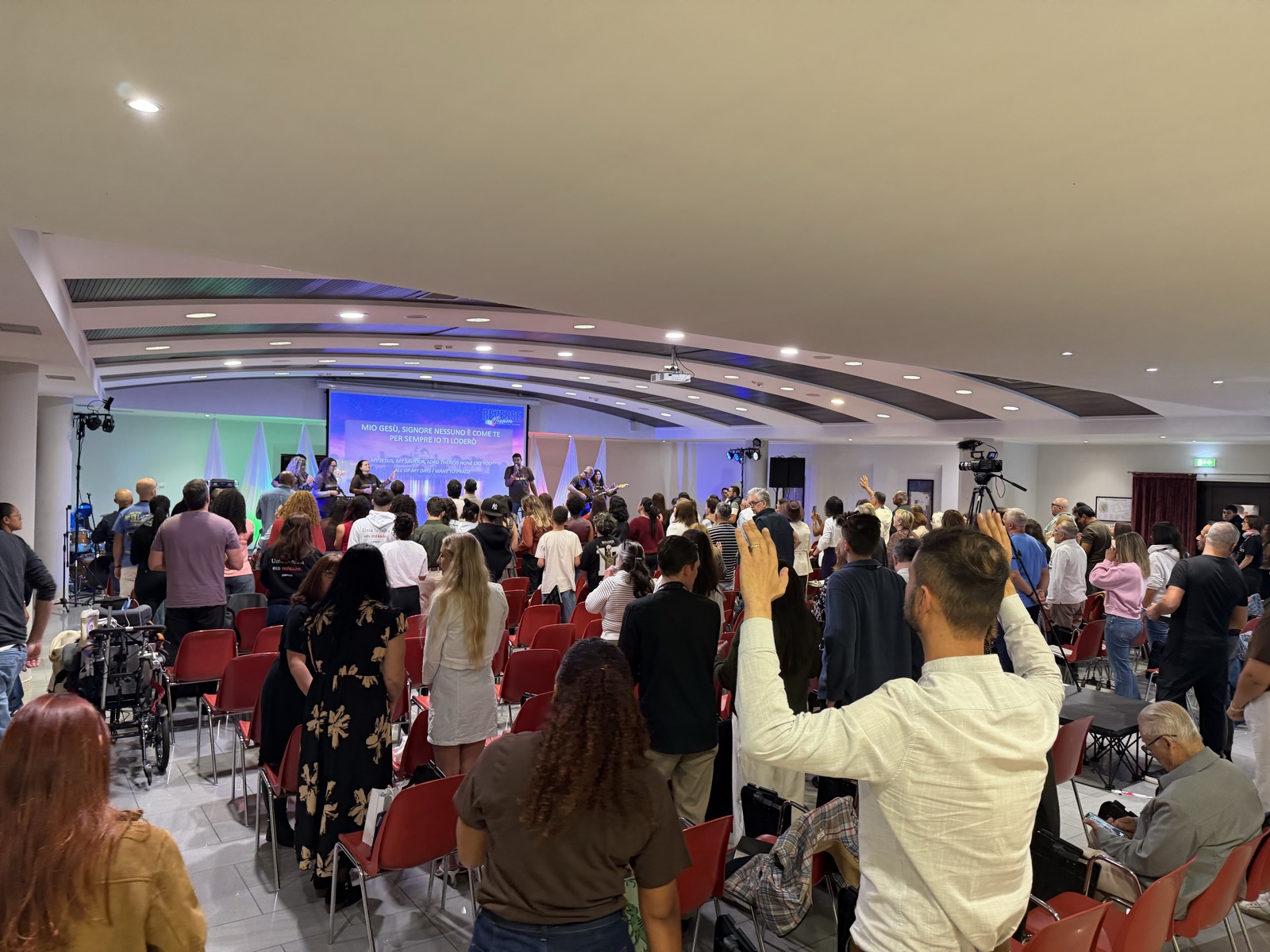
Across America, immigrant congregations are growing. Hispanic, Brazilian, African, Korean, Chinese, and other immigrant churches are planting new congregations, revitalizing struggling churches, and introducing new generations to the Christian faith.
This phenomenon is often described as reverse mission—the movement of Christians from the Global South to historically Christian regions of the West for the purpose of evangelization, church planting, and renewal.
Ironically, many nations that once received missionaries are now sending missionaries back.
New England: A Laboratory of Reverse Mission
Nowhere is this reality more visible than in New England.
The region that once experienced the ministries of figures like Jonathan Edwards and George Whitefield is now one of the least religious areas of the country. Yet it is also becoming a place where immigrant churches are bringing new life to historic Christian communities.
Many congregations that were once declining are discovering renewed vitality through multicultural ministry. Churches are increasingly reflecting the ethnic diversity of their neighborhoods and communities.
This is not merely a demographic change. It is a missiological opportunity.
The future of Christianity in America may look very different from its past. It will likely be more multicultural, multilingual, and globally connected.
The Challenge Before the Church
The greatest threat to Christianity in America may not be secularism alone.
It may be the church's inability to embrace the people God is bringing to its doorstep.
Many congregations pray for revival while remaining hesitant to welcome immigrants, refugees, and people from different cultural backgrounds. Yet throughout Scripture, God's mission consistently crosses ethnic, linguistic, and cultural boundaries.
The New Testament vision of the church is not built around a single culture or nationality. It is a community gathered from every tribe, language, people, and nation.
If American churches fail to embrace this reality, they may continue to decline.
But if they do embrace it, they may discover that renewal arrives in unexpected ways.
An Easter Reminder
The Easter story reminds Christians that God specializes in bringing life out of what appears to be dead.
The cross seemed like defeat.
The empty tomb revealed resurrection.
In a similar way, some see only decline when they look at Christianity in America. Yet beneath the surface, God may already be at work through immigrant churches, multicultural congregations, and a new generation of believers shaped by the realities of global Christianity.
The future of American Christianity is unlikely to be defined solely by traditional categories of white evangelicalism or white progressivism.
Instead, it may increasingly be shaped by immigrant communities and the children of immigrants who are bringing fresh energy, faith, and missionary vision to the American church.
Predictions about the death of Christianity in America may make for compelling headlines.
But history—and perhaps even the present moment—suggests a different possibility:
The church in America may not be dying.
It may be preparing for its next resurrection.
About the author
Lierte Soares Junior is a Brazilian-American pastor, missionary, and educator serving in New England. As a “reverse missionary,” he was sent from Brazil to New England to help revitalize churches. He serves as the president of the Baptist Churches of New England.
Soares holds a law degree from Faculdade de Direito Vale do Rio Doce, a business degree, an education degree plus a Bachelor of Arts in Theology from Faculdade de Teologia Integrada in Brazil. He also holds a Master of Divinity from Midwestern Baptist Theological Seminary in Missouri and a Master of Theological Studies with a concentration in cross cultural missions from Southwestern Baptist Theological Seminary in Texas. He is currently pursuing a Doctor of Ministry in Missions and Evangelism from Southwestern Baptist Theological Seminary.
Lierte Soares's extensive educational background in theology, missions, and evangelism directly informs and empowers his ministry as a “reverse missionary” in New England. His academic path, spanning degrees from both Brazil and the United States, has equipped him with a nuanced understanding of cross-cultural ministry, church planting, and leadership in diverse contexts.
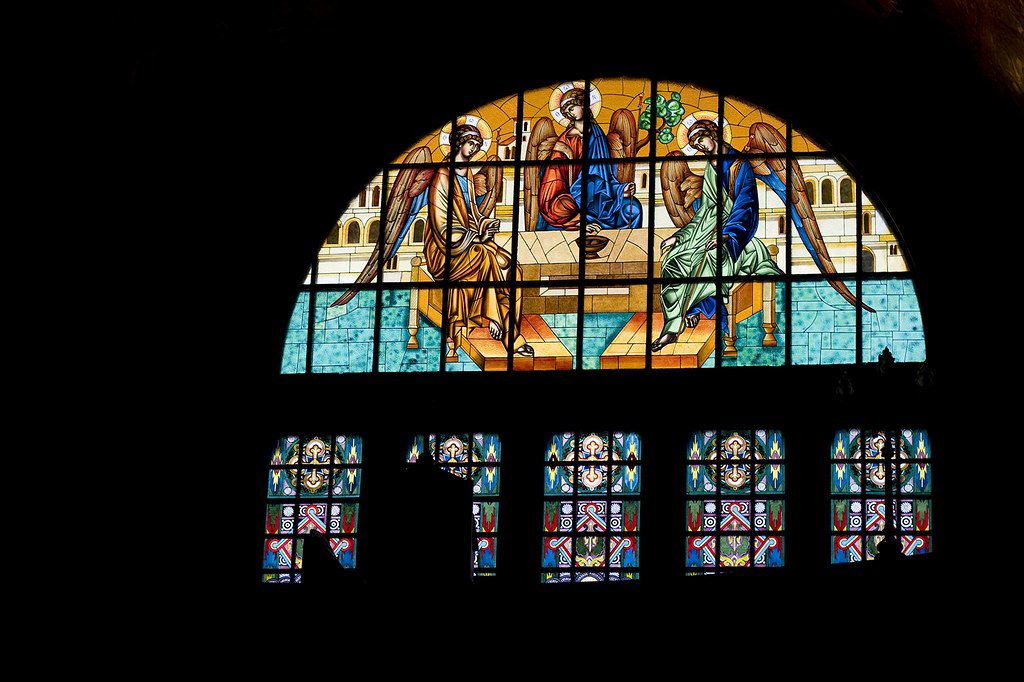
Cover image: stained-glass rose window via Flickr (CC BY 2.0).