
Reverse Mission Conference 2026 article series · Article 1 of 5
Abstract
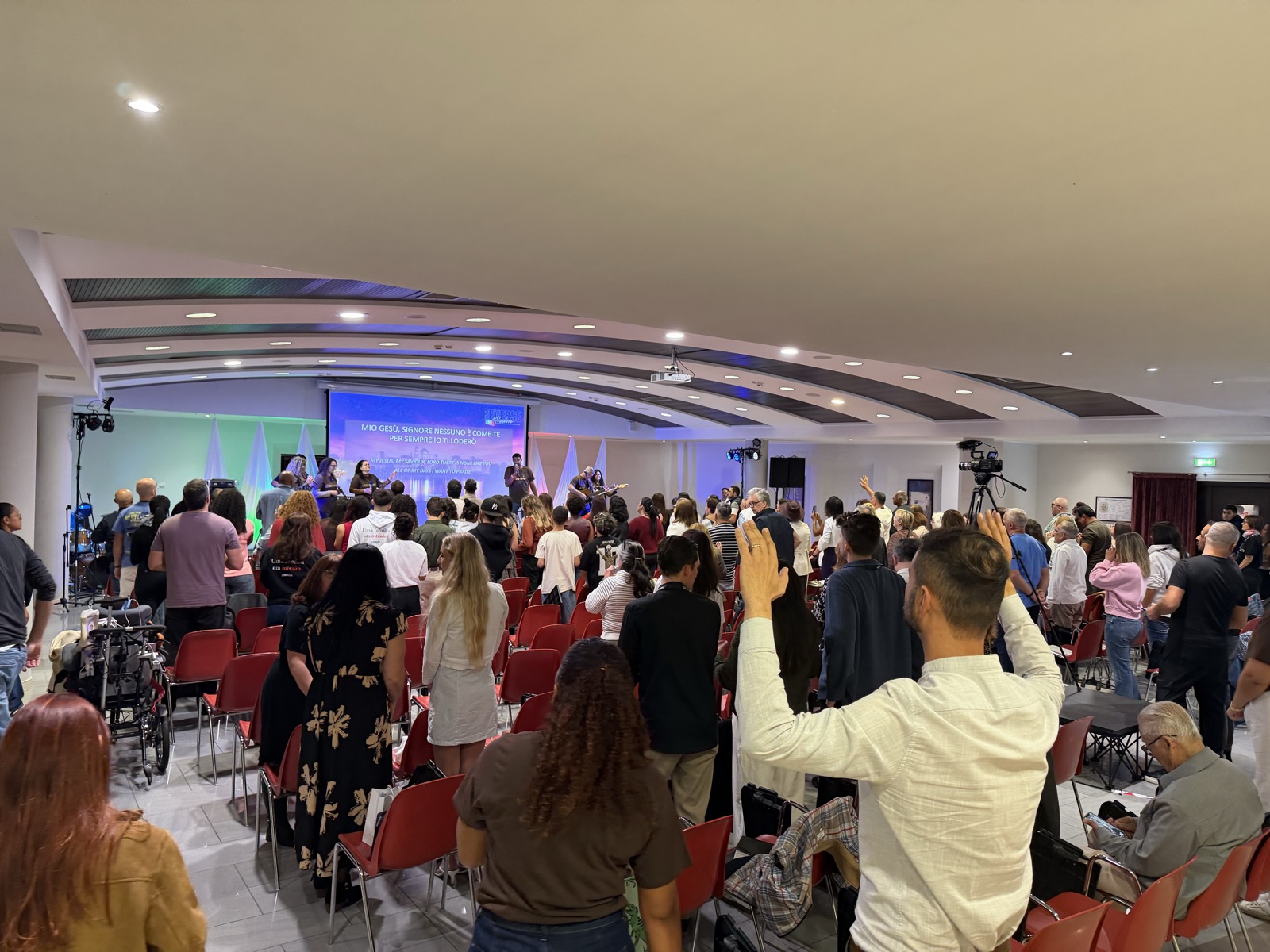
For centuries, the Protestant missionary imagination was shaped by an apparently predictable movement: churches in the Global North sent people, resources, and institutions to other parts of the world. Today that map has become polycentric. Churches once described mainly as “mission fields” now also send missionaries, plant congregations, revitalize churches, and train leaders in Western contexts. This article introduces Reverse Mission without triumphalism and proposes a theological and missiological reading of the phenomenon: mission has not changed owners or essence; its routes, agents, and patterns of cooperation have changed. The question that should precede the conference is therefore less geographical than spiritual: will we recognize where God is directing his Church?
Keywords: Reverse Mission • missio Dei • Global South • Europe • Acts 16 • missionary cooperation
God’s mission has not become reverse. The missionary routes have changed.
A map that no longer fits the old arrows
For a long time, missionary maps used in churches and seminaries seemed to tell a simple story. The arrows largely began in Europe and North America and pointed toward Africa, Asia, and Latin America. That picture had historical substance: European and North American missionary movements played a decisive role in the modern expansion of Protestant Christianity. Yet contemporary global Christianity can no longer be represented by that one-directional scheme.
The growth and consolidation of churches in the Global South have produced new sending centers, new networks, and new missionary experiences. Lierte Soares describes Reverse Mission as the active involvement of churches, missionaries, and leaders from regions once classified as mission fields in evangelism, church revitalization, and church planting within historically Christian societies (Soares, 2026). From a Latin American missiological perspective, Samuel Escobar had already urged a different imagination: twenty-first-century mission is the shared responsibility of a global Church, moving “from all peoples to all peoples” (Escobar, 2008).
This shift should not be treated as a sociological curiosity. It forces us to revisit categories that sometimes confused the gospel with geography, ecclesial maturity with economic power, and missionary authority with national origin. When Christianity becomes genuinely global, sending can no longer be imagined as flowing from only one center. Churches discover that they can receive and send at the same time.
A useful expression that requires caution
The phrase “Reverse Mission” is compelling because it communicates a historical inversion of missionary flows in a few words. The difficulty begins when “reverse” is understood as revenge, replacement, or superiority. Europe once sent missionaries, so now the Global South “returns the favor”; the North has lost vitality, so the South arrives as the new protagonist. Such a narrative is rhetorically attractive, but theologically inadequate.
Christian mission never belonged to the Global North, just as it does not belong to the Global South today. Mission belongs to God. Missiology expresses this conviction through the category missio Dei: before mission is an activity of the Church, it is the movement of the sending God. The Church participates in what God is already doing. Therefore, a shift in the geographical origins of missionaries does not mean that mission has reversed in a theological sense. It means that God continues to call people from different places and redistribute responsibility within the body of Christ.
Brazilian sociological literature also highlights the complexity of this movement. Oro and Alves (2015) study Brazilian missionary flows toward Europe and show that so-called “inverted mission” involves global encounters as well as cultural confrontations. Burity (2018), studying Brazilian missionaries in the United Kingdom, demonstrates that mission transforms not only the receiving context but also the identity of those who arrive. Mission, therefore, cannot be the untouched export of a religious culture; it is an encounter in which the messenger must also learn.
The echo of Macedonia
Acts 16:6–10 offers a particularly fruitful biblical image for this discussion. Paul has plans, yet the Holy Spirit interrupts two possible routes. The team is not permitted to remain on the path it initially intended to follow. Only after closed doors and a descent to Troas does Paul receive the vision of the Macedonian man: “Come over to Macedonia and help us” (Acts 16:9).
The passage matters for contemporary mission because expansion is not presented as the automatic consequence of ambition, resources, or convenience. Direction is discerned. The team concludes that God is calling them to proclaim the gospel in a new setting. Macedonia is not born from a campaign to occupy territory; it emerges from obedience.
This may be the most important correction needed in current conversations about Reverse Mission. The decisive question is not, “Which part of the world is now strongest enough to send?” It is, “Where is God directing the Church, and with what posture should we arrive?” Soares returns to Acts 16 to describe a moment in which the Macedonian call is once again heard in Europe, now also by Christians coming from the Global South (Soares, 2026).
Europe is not an empty museum
Speaking of Europe as a mission field requires equal care. Secularization, the declining institutional centrality of Christianity, and changing religious practices are relevant realities, but they do not justify caricature. Europe is not homogeneous, nor is it a “godless continent.” It contains faithful churches, renewal movements, historic congregations, new church plants, migrant networks, and many different expressions of Christian life. Serious missionary theology does not begin by dismissing those already present.
Healthy Reverse Mission therefore requires partnership with local churches, attentive listening to national and regional histories, learning the social patterns of belonging, and awareness of wounds created by earlier religious projects. This is especially important in Portugal. A shared language with Brazil can create a false sense of familiarity. Missionary experience in northern Portugal suggests the opposite: similar vocabulary can conceal deep differences in historical memory, communication, relational pace, and attitudes toward religion (Melo, 2025).
Ronaldo Lidório (2014) reminds us that communicating the gospel cross-culturally requires both theological faithfulness and cultural intelligibility. This double commitment avoids two opposite errors: changing the message to gain acceptance, or preserving cultural forms as though they were an unchangeable part of the message.
A conference for better questions
A conference on Reverse Mission should not exist merely to celebrate a new missionary flow. It should help the Church ask more demanding questions. How can North-South partnerships avoid repeating paternalistic patterns? How do we distinguish contextualization from cosmetic adaptation? How can local leaders be formed so that a church planted by outsiders becomes deeply rooted in the people it hopes to serve? How can migrant congregations become bridges without being condemned to remain enclosed within their own diasporas? How can the Christian history of Europe be honored without becoming captive to nostalgia?
These questions sit at the heart of the experience of Igreja Baptista Local in northern Portugal. The project began with a small group during the pandemic and developed through intentional relationships, discipleship, small groups, and leadership development. More important than numerical results is the central lesson: arriving in a country is not the same as reaching a country. Crossing the ocean is only one part of the journey; the other crossing is cultural, relational, and spiritual.
That is why Reverse Mission deserves attention. Not because it represents the victory of one region over another, but because it reveals a more beautiful and demanding reality: the Church of Christ has become visibly polycentric. Former sending regions still have much to offer; former receiving regions are also sending; and every part needs the others. Before the conference begins, one question is worth carrying with us: if God is once again changing the routes, will we have the humility to discern the way and the courage to cross?
References
Escobar, Samuel. Cómo comprender la misión: de todos los pueblos a todos los pueblos [Understanding Mission: From All Peoples to All Peoples]. Buenos Aires: Ediciones Certeza Unida, 2008.
Lidório, Ronaldo. Comunicação e cultura: a antropologia aplicada ao desenvolvimento de ideias e ações missionárias no contexto transcultural [Communication and Culture]. São Paulo: Vida Nova, 2014.
Melo, João. Plantação de Igreja: expansão do trabalho missionário em Portugal [Church Planting: Expanding Missionary Work in Portugal]. Mission report, 2025.
Oro, Ari Pedro, and Daniel Alves. “Encontros Globais e Confrontos Culturais: O Pentecostalismo Brasileiro à Conquista da Europa.” Dados 58, no. 4 (2015): 951–980. DOI: 10.1590/00115258201563.
Burity, Joanildo. “Glocalização e mudança de identidade: missionários brasileiros pentecostais e carismáticos no Reino Unido.” Religião & Sociedade 38, no. 1 (2018): 14–35. DOI: 10.1590/0100-85872018v38n1cap01.
Soares, Lierte. Introdução a Missão Reversa: O Círculo Completo do Evangelho [Introduction to Reverse Mission: The Gospel’s Full Circle]. Unpublished manuscript, 2026.
Note: this article was developed from the plenary material “Come Over and Help Us,” the missionary reports of Igreja Baptista Local, and the literature listed in the references.