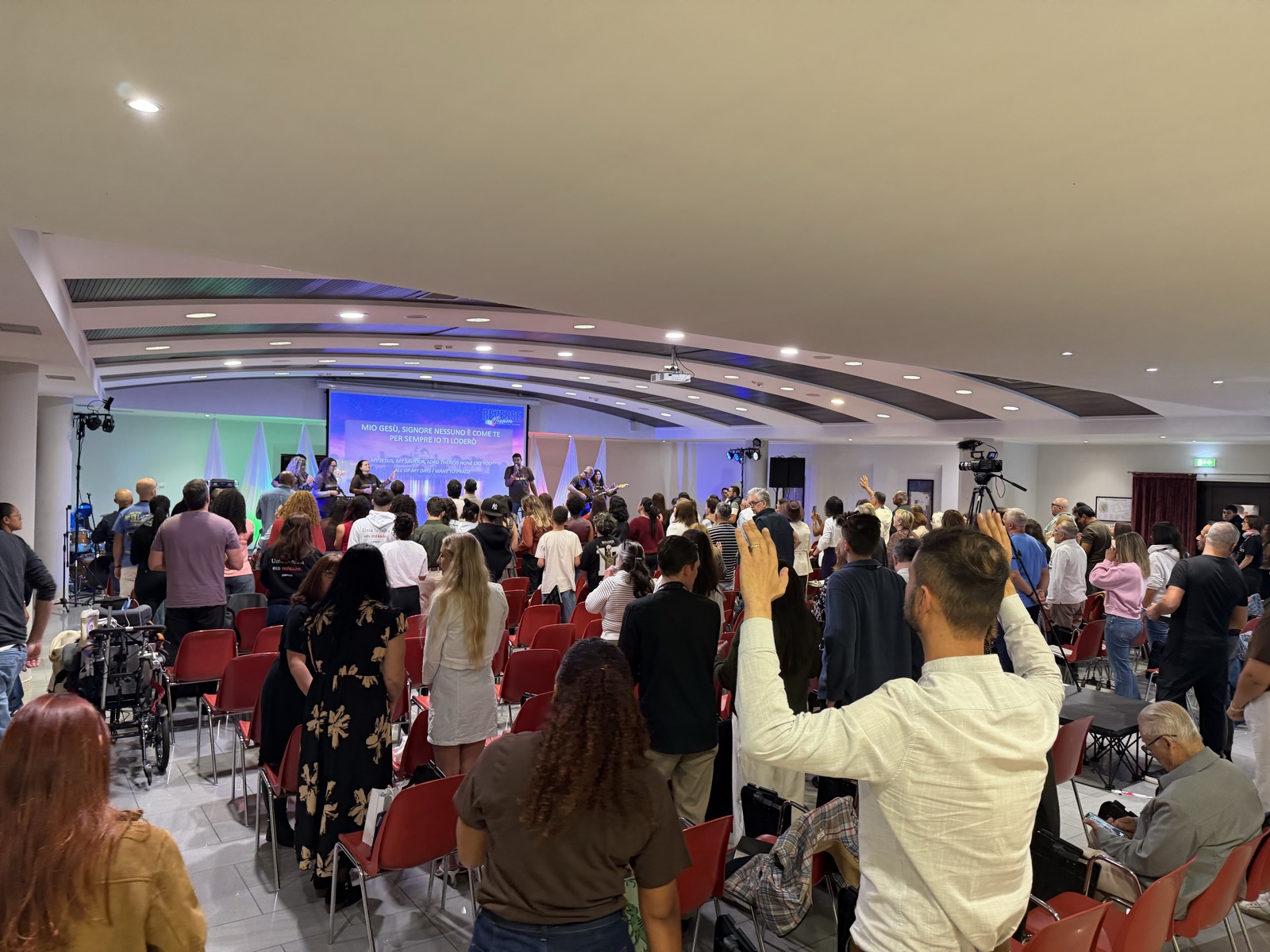
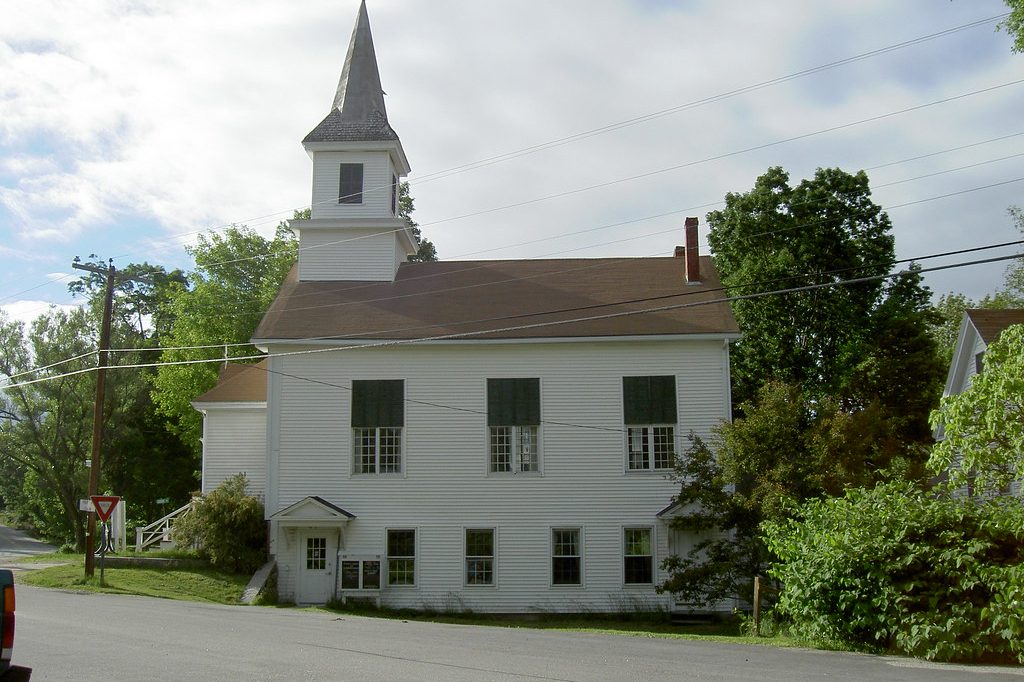
Older Established Anglo Churches. Older Established Immigrant Churches.
by Lierte Soares
New England is one of the most historically rich and spiritually significant regions in American history.
The First Great Awakening shook these towns. Missionary movements were launched from these cities. Some of the oldest churches in the United States still stand on the streets of Boston, Providence, Hartford, Portland, and hundreds of small New England communities. Church steeples once defined the skyline and the moral imagination of entire towns.
At the same time, New England has also become one of the most spiritually challenging regions in North America.
Today, many historic churches — both older Anglo congregations and older immigrant congregations — are facing decline, stagnation, aging membership, leadership fatigue, and uncertainty about the future.
Some churches were once filled with young families and community influence but now struggle to maintain basic ministries. Others are surviving financially through endowments or property ownership while slowly losing missional vitality. Still others are quietly wondering whether they will even exist in another decade.
And yet, despite these realities, I remain deeply hopeful.
Because I have also seen churches in New England experience renewal.
I have seen dying congregations rediscover prayer. I have seen older churches regain evangelistic passion. I have seen immigrant churches become mission-sending centers. I have seen multiethnic worship emerge in places once divided by language and culture. I have seen churches once focused entirely on survival become focused once again on the Great Commission.
Decline is not inevitable.
But renewal requires honesty.
The Crisis Is Deeper Than Attendance
Most struggling churches assume their greatest problem is numerical decline. But attendance is rarely the true issue. Attendance is usually the visible symptom of deeper spiritual, cultural, relational, and organizational realities.
A church can lose attendance because it has lost mission. A church can lose young people because it has lost intergenerational discipleship. A church can lose influence because it has lost credibility with its community. A church can lose vitality because it has slowly become inward-focused rather than kingdom-focused.
In many churches throughout New England, the problem is not a lack of buildings, history, doctrine, or sincerity.
The problem is that the church's culture no longer supports mission. Some churches have become guardians of memory rather than missionaries to their communities. Others have become so consumed with institutional survival that they no longer ask how to reach lost people.
Still others unconsciously communicate: “You are welcome here — as long as you become like us first.”
That mindset eventually produces stagnation.
The Unique Spiritual Context of New England
To understand church revitalization in New England, one must first understand the spiritual environment of the region itself. New England is deeply shaped by secularism, intellectual skepticism, historical nominalism, and post-Christian culture. Unlike some regions of the United States where church participation still carries social value, many New England communities view organized religion with suspicion, indifference, or cultural distance.
In many towns, attending church is no longer culturally expected. For younger generations especially, Christianity often feels unfamiliar, distant, or irrelevant. At the same time, New England is undergoing profound demographic transformation.
Immigration has changed the region dramatically over the last several decades. Communities throughout Massachusetts, Rhode Island, Connecticut, and beyond are increasingly multicultural and multilingual.
Brazilian, Hispanic, Haitian, African, Asian, and Caribbean communities are reshaping the social and spiritual landscape of New England.
This creates enormous missionary opportunity.
But it also creates tension for older churches that were formed in a very different cultural moment.
Some Anglo churches struggle to adapt to multicultural realities.
Some immigrant churches struggle to move beyond ethnic preservation toward broader mission engagement.
Both can become trapped by nostalgia.
Nostalgia Is a Terrible Mission Strategy
Many churches in New England are trying to preserve a world that no longer exists.
Older Anglo churches often long for the social influence Christianity once held in America. They remember crowded Sunday schools, civic respectability, and generations of stable membership.
Older immigrant churches often long for the emotional familiarity of their homeland culture. They preserve language, music, customs, and relational structures that once gave immigrant families stability and identity.
None of these things are inherently wrong.
Heritage matters. History matters. Cultural identity matters.
But when preservation becomes the primary mission of the church, evangelism suffers.
The church was never called merely to preserve memory. The church was called to make disciples.
The danger comes when churches confuse faithfulness to the gospel with faithfulness to a particular cultural expression of the gospel.
The gospel is eternal. Our methods are not.
Ten Reasons Many New England Churches Remain Small and Stagnant
1. Comfort Has Replaced Mission
Many churches genuinely want growth — as long as growth does not disrupt familiarity.
But healthy growth always changes a church.
New people bring new questions, new backgrounds, new personalities, and new expectations. They require adaptation.
Some churches unconsciously resist this because comfort feels safer than mission.
This happens in both Anglo and immigrant congregations. In Anglo churches, it may appear as rigid attachment to tradition. In immigrant churches, it may appear as overprotection of language or ethnicity.
But the underlying issue is the same: preserving internal comfort becomes more important than reaching outsiders.
The New Testament church was never built around comfort. It was built around mission.
2. Pastoral Instability Prevents Deep Transformation
Many struggling churches in New England experience rapid pastoral turnover.
Some pastors leave because of discouragement. Others leave because churches become resistant to change. Some churches simply consume leaders faster than they can sustain them.
But churches rarely experience meaningful revitalization without long-term pastoral trust.
In New England, credibility takes time. People here are often skeptical of quick promises and religious enthusiasm. Trust is earned slowly through consistency, integrity, presence, and perseverance.
Churches that change pastors every two or three years rarely develop long-term vision or cultural transformation.
Revitalization requires patient leadership.
3. Hidden Power Structures Block Renewal
One of the most common characteristics of declining churches is unofficial control by a small group of people.
Sometimes these individuals genuinely sacrificed to keep the church alive during difficult seasons. Their service deserves honor.
But over time, caretakers can become gatekeepers. Innovation becomes threatening. New leaders are viewed with suspicion. Every new idea must pass through invisible power structures before implementation.
This problem exists in Anglo churches, immigrant churches, rural churches, urban churches, and suburban churches alike.
And it quietly suffocates renewal.
Healthy churches create shared leadership, accountability, transparency, and leadership development pathways.
4. Churches Have Lost Confidence in Evangelism
Many churches no longer expect people to come to Christ.
They still hold services. They still maintain programs. But evangelistic urgency has faded.
In some churches, evangelism has become little more than inviting already-churched people from another congregation.
But New England desperately needs genuine gospel witness.
The region is filled with lonely people, spiritually searching people, addicted people, skeptical people, deconstructed people, secular professionals, immigrants, refugees, and disconnected young adults.
People are still hungry for meaning, truth, hope, and community.
But churches must recover missionary courage.
5. Fear of Cultural Change
Many congregations unconsciously resist people who are culturally different.
A church may say, “Everyone is welcome,” while simultaneously communicating that real belonging requires cultural assimilation.
That mindset eventually limits mission.
The future of Christianity in New England will almost certainly be increasingly multicultural.
Churches that cannot embrace diversity relationally, spiritually, and organizationally will struggle to reach future generations.
The Kingdom of God has always been multilingual and multiethnic.
6. Lack of Clear Mission and Strategic Focus
Many churches are busy but ineffective.
Programs continue because they have always existed. Meetings happen because meetings have always happened. Calendars remain full while mission remains unclear.
When churches lose clarity, they drift into maintenance mode.
Healthy churches know:
Why they exist
Who they are trying to reach
What discipleship looks like
What ministries truly align with their calling
What must be stopped in order to focus on what matters most
Not every church can do everything.
But every church can do something missionally significant.
7. Intergenerational Discipleship Has Broken Down
This may be one of the greatest threats facing both Anglo and immigrant churches.
Many churches failed to intentionally disciple the next generation.
Older members often assumed younger people would simply remain connected automatically.
But modern culture aggressively disciples young people every day through media, education, entertainment, technology, and social ideology.
If churches do not intentionally disciple younger generations, the culture will.
Many second- and third-generation immigrant young adults no longer feel culturally connected to the churches their parents built.
Many Anglo churches struggle to communicate biblical faith meaningfully to younger generations shaped by secularism.
Without intentional discipleship, churches age rapidly.
8. Prayer Has Been Replaced by Activity
Many churches are busy but spiritually weak.
Meetings continue. Programs continue. Events continue.
But dependence on God quietly disappears.
Historically, every major awakening in New England was preceded by extraordinary prayer.
Revival was never merely organizational. It was spiritual.
No strategy can substitute for genuine spiritual renewal.
Churches that experience revitalization usually rediscover humility, repentance, intercession, and deep dependence on the Holy Spirit.
9. Churches Confuse Tradition with Theology
One of the most dangerous mistakes churches make is treating cultural preferences as eternal doctrine.
The gospel never changes. But methods must continually adapt.
Music styles change. Communication methods change. Leadership structures change. Technology changes. Outreach strategies change.
The Apostle Paul adapted constantly in order to reach people without compromising biblical truth.
Churches that refuse to adapt eventually become disconnected from their communities.
Faithfulness does not mean refusing change. Faithfulness means refusing compromise while remaining missionally flexible.
10. Churches Have Forgotten They Are Missionaries
Perhaps this is the deepest issue of all.
Many churches no longer see themselves as missionaries to their own communities.
But New England is now one of the great mission fields of North America.
The future belongs to churches willing to think like missionaries again.
That means:
studying the culture
understanding the community
engaging people relationally
building trust
serving neighborhoods
embracing cross-cultural ministry
proclaiming the gospel boldly and compassionately
This is especially important for immigrant churches.
Many immigrant congregations were planted initially to preserve language and provide community support for newcomers.
But God may now be calling these churches into something larger.
Not merely preserving culture — but helping re-evangelize New England itself.
This is one of the great opportunities of reverse mission in our generation.
The Future of the Church in New England
I do not believe the story of Christianity in New England is finished.
I believe God is raising up pastors, church planters, missionaries, immigrant leaders, revitalizers, intercessors, and courageous congregations for a new season of gospel witness.
But renewal will require difficult honesty.
Some churches will need to repent of pride. Others will need to repent of fear. Some will need to release control. Others will need to embrace multicultural ministry. Some will need to rethink leadership structures, discipleship strategies, and ministry priorities entirely.
Renewal always costs something.
But decline costs far more.
A Final Word
Some churches that seem weak today are only one season of repentance and renewal away from spiritual awakening.
God has not abandoned New England.
The same region that once experienced great awakenings can experience awakening again.
But revival rarely begins with crowds.
It begins with humble people willing to pray, repent, listen, adapt, and obey.
Not every church will become large. But every church can become faithful.
And faithful churches still transform cities, neighborhoods, families, and nations.
“Will You not revive us again, that Your people may rejoice in You?” — Psalm 85:6
About the author
Lierte Soares Junior is a Brazilian-American pastor, missionary, and educator serving in New England. Sent from Brazil as part of the growing movement of reverse mission, he is engaged in strengthening and revitalizing churches across the region. He currently serves as president of the Baptist Churches of New England.
His academic journey reflects a strong commitment to both theological depth and practical ministry. He earned a law degree from Faculdade de Direito Vale do Rio Doce, along with degrees in business and education, and a Bachelor of Arts in Theology from Faculdade de Teologia Integrada in Brazil. In the United States, he completed a Master of Divinity at Midwestern Baptist Theological Seminary and a Master of Theological Studies with a concentration in cross-cultural missions from Southwestern Baptist Theological Seminary. He is currently pursuing a Doctor of Ministry in Missions and Evangelism at the same institution.
This diverse academic formation—spanning both Brazil and the United States—deeply shapes his ministry. It has equipped him with a thoughtful and practical understanding of cross-cultural engagement, church revitalization, and leadership in complex, multicultural settings. As a reverse missionary, Soares brings together theological training and lived experience to serve the Church in New England with clarity, conviction, and a global perspective.
Cover image: New England church photograph via Flickr (CC BY 2.0).