
In 1871, Henry Morton Stanley, a journalist for the New York Herald, was sent to find the missionary David Livingstone. Livingstone had been out of contact with the outside world for years, and many feared he was dead. Stanley found him at Ujiji, on Lake Tanganyika in present-day Tanzania. By Stanley's account, he walked up to the only European in the crowd and said, "Dr. Livingstone, I presume?"
The modern mission movement began in the late eighteenth century and gathered steam in the nineteenth, as Europe and North America sent missionaries to Asia, Africa, and beyond. William Carey went to India, Adoniram Judson to Burma, David Livingstone to Africa, and Hudson Taylor to China, while figures like Luther Rice mobilized support at home. The gospel spread rapidly, and millions came to faith in Jesus Christ.
Two centuries later, Europe is among the most secular regions on earth. North America has retained more of its Christian heritage, but it too has declined significantly, particularly in New England, where evangelicals are a small minority.
Reverse mission begins
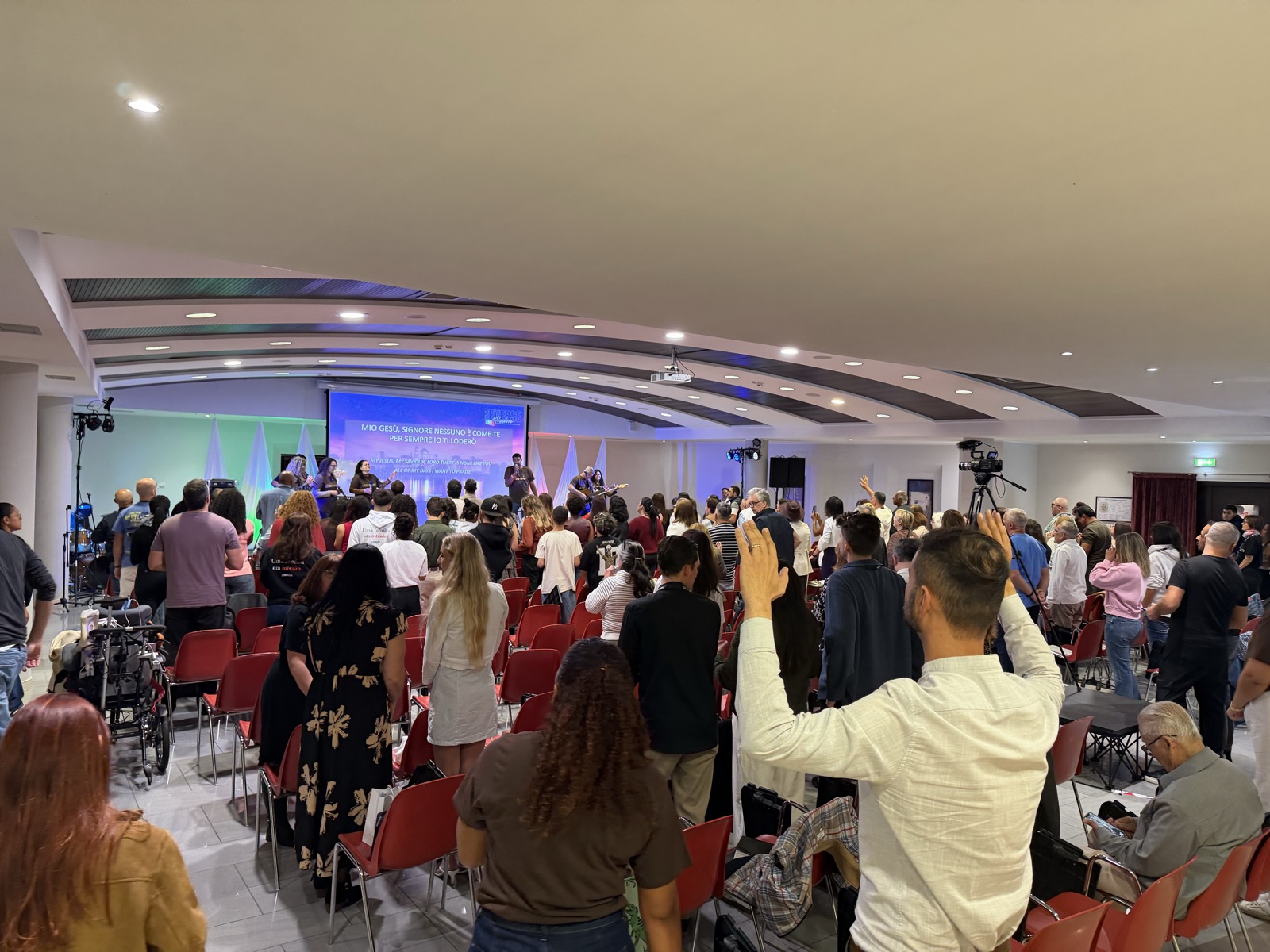
Many churches in the Global South and East Asia felt a debt to the Europeans and Americans who first brought them the gospel, and they wanted to return the favor. The mission field became a mission base. Over the final decades of the twentieth century, reverse missions gained momentum as missionaries left Brazil, South Korea, Nigeria, and other countries once considered mission fields to evangelize the West.
No single center
In earlier centuries, anyone asked to locate the intellectual, financial, and numerical center of Christianity would likely have pointed to Western Europe and North America. Today, missiologists recognize that the demographic center has shifted decisively to the Global South, and Africa now hosts more Christians than any other continent.
Perhaps it is more accurate to say that global Christianity no longer has a single geographic center at all. The gospel is sent to the entire world, creating a multidirectional movement in which churches everywhere encourage and equip one another: South to North, East to West, and everywhere in between.
Colonial-isn't
Christianity has often been criticized for its historical entanglement with colonialism, yet it was never meant to be bound to any single culture. The gospel works like leaven in dough or salt in a meal, transforming cultures from within without erasing their distinctiveness. As believers from non-Western nations labor to reach a secularizing West, they challenge the misconception that Christianity is merely an instrument of colonialism. Christ came for every nation, tribe, people, and language.
Both-and, not either-or
Christianity continues to grow rapidly across Africa and parts of Asia, while Europe and North America continue to decline spiritually. Mission strategy must take both realities seriously.
This does not mean abandoning traditional mission fields. Asia remains home to the largest unreached populations on earth and requires sustained missionary engagement. But these efforts should not be pitted against each other. We need to do both simultaneously. Secularized Western nations are critical mission fields in their own right, and ignoring them risks weakening the entire global church. Only the United Kingdom, at 7.5%, rises above the low single digits. According to Joshua Project estimates, evangelical Christians make up a strikingly small share of the population across most of Western Europe:
Country
Evangelicals (%)
Austria
0.6%
Liechtenstein
0.6%
Luxembourg
1.0%
France
1.3%
Monaco
1.3%
Belgium
1.4%
Ireland
1.7%
Germany
2.1%
Netherlands
4.0%
Switzerland
4.0%
United Kingdom
7.5%
Sending and receiving
The loss of Europe's rich Christian heritage is tragic, but the human cost is far greater: millions living without the hope of Jesus Christ. Treating historically Christian nations as spiritual safe havens rather than active mission fields effectively abandons them.
Western nations also hold a significant portion of global financial resources and fund a substantial share of international mission work. If these historically sending regions continue sliding into secularism, the global church could lose both financial support and valuable partners in the Great Commission. Reverse mission is not a temporary trend; it is a vital necessity for the global church's future.
Today, in a room full of Europeans, I might meet a Brazilian or a Korean, a Nigerian or a Chinese believer, and be able to say, "A missionary here, I presume?"
About the author
Dr. Rick Harrington serves as Provost of the BCNE Multiplication Center and Pastor for Preaching and Vision at First Baptist Church of Haverhill, Massachusetts. He holds a Doctor of Ministry in Preaching from Gordon-Conwell Theological Seminary and has extensive experience in pastoral ministry, preaching, leadership development, and theological education. Harrington is passionate about strengthening the local church and equipping leaders for faithful participation in the Great Commission. He is also the author of Churching: Rediscovering the Centrality of the Church in the Christian Life.